7 Reasons Women On GLP-1s Are Losing Muscle — And Why "Just Eat More Protein" Was Never Going To Work
If you're on Ozempic, Wegovy, Mounjaro, or Zepbound — and you're losing muscle no matter how much protein you force down — your doctor has been giving you advice that was biologically impossible to follow.
It wasn't your fault.
Here are 7 things your doctor should have explained before you ever filled that first prescription — and the one mechanism destroying your muscle that almost no prescribing physician knows about yet.
1. Up To 40% Of The Weight You've Lost Isn't Fat — It's Muscle.
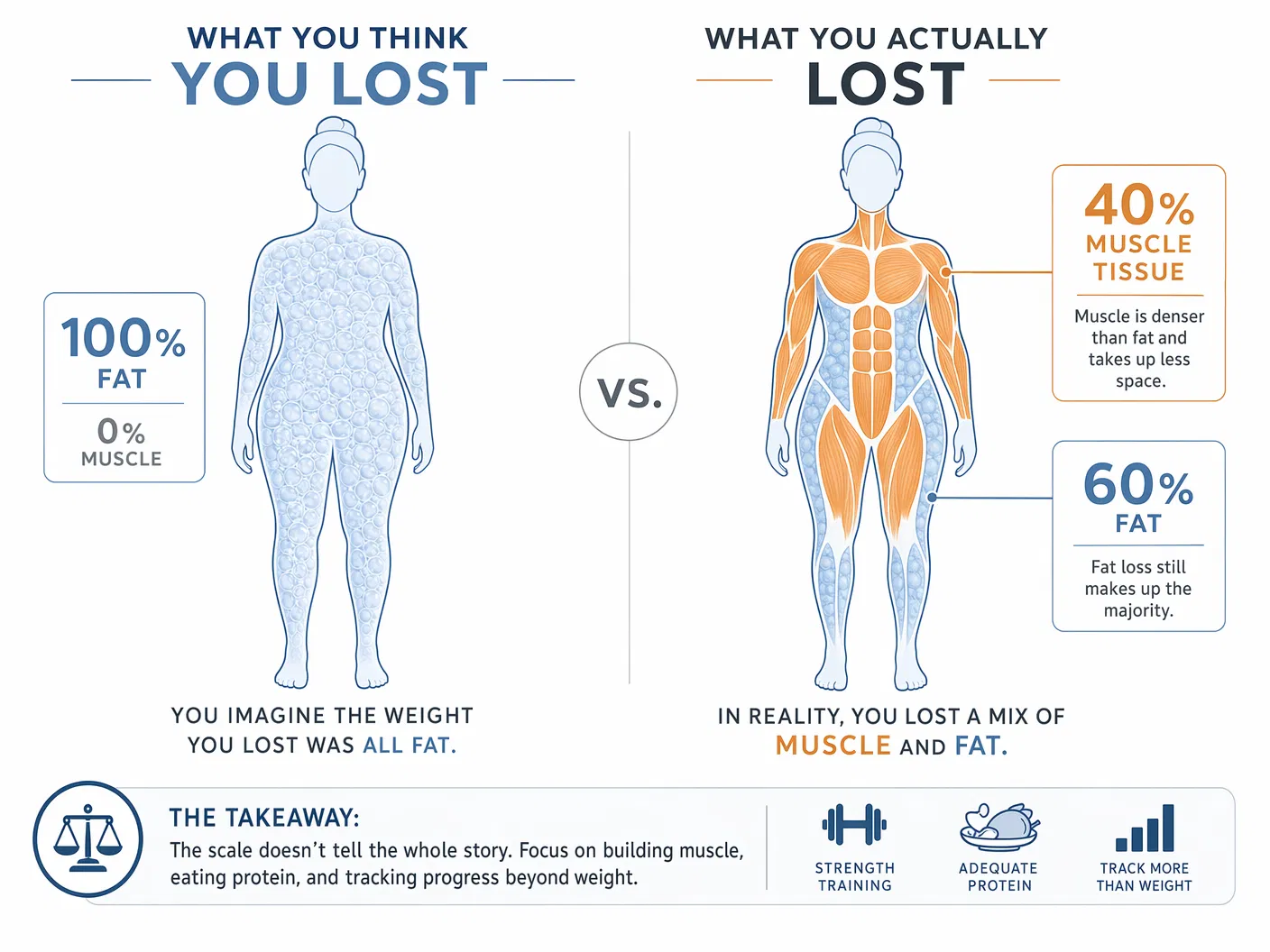
This isn't a side effect you have to watch for. It's a metabolic certainty built into how these medications work.
In the manufacturers' own clinical trials — the STEP and SURMOUNT programs that got Ozempic, Wegovy, Mounjaro, and Zepbound approved — researchers measured body composition. Not just weight loss. The kind of weight loss.
The finding: up to 40% of lost weight was lean mass, not fat.
That data exists. It's published. It's in the fine print. And it was never made part of the conversation with your doctor, which means it was never made part of the conversation with you.
If you've lost 40 pounds on your GLP-1, up to 16 of those pounds may have come from your muscle, your bone density, your organ tissue — the very things keeping you strong at 52.
And nobody tested which kind you were losing.
2. Your Doctor Knew. Or Should Have.

Here's the quiet truth the medical community isn't ready to discuss:
Most prescribing doctors have read the marketing materials for these medications. Very few have read the clinical appendices where the lean mass loss data lives.
So when you came in saying "I feel weaker, something's wrong" — your doctor wasn't lying when she said "eat more protein." She was giving you the only answer she had.
It just happened to be the wrong one.
One post-purchase survey respondent put it this way:
"I told him I felt weaker and he said 'well you're losing weight, that's the point.' I KNEW something was off but every doctor just kept telling me 'that's normal.' I was gaslit by my own doctor for 6 months."
You weren't imagining it. You weren't being dramatic. You were the only person in the room with the full picture — the mirror, the exhaustion, the weakness — and nobody else knew what to do with it.
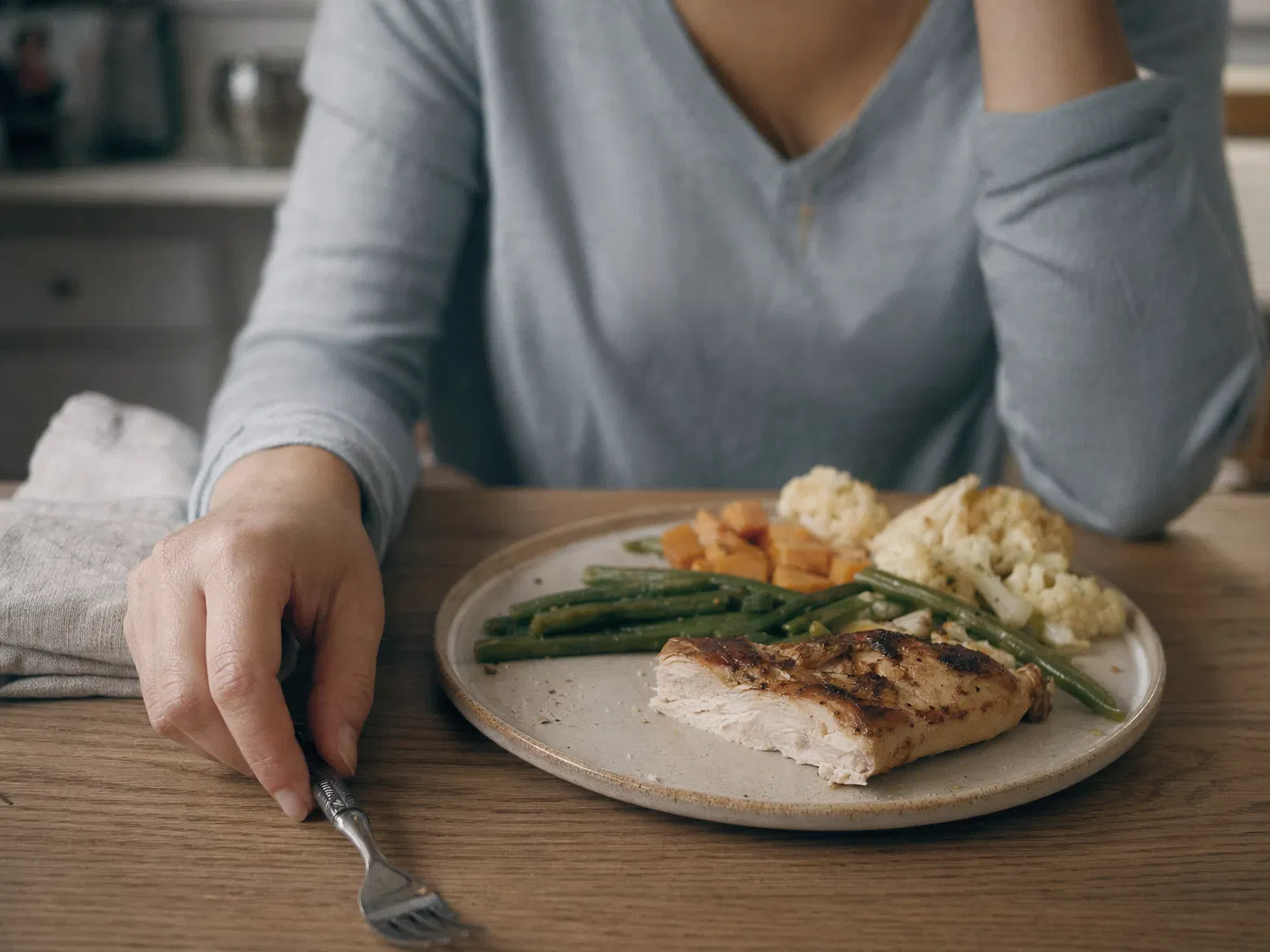
3. "Eat More Protein" Is Physically Impossible On A GLP-1.
This is the part that should make you furious.
Research shows you need roughly 80 to 120 grams of protein per day to preserve muscle during rapid weight loss.
Your GLP-1 has suppressed your appetite to the point where four bites of chicken makes you nauseous. On a good day, you might be eating 35–40 grams. That's a 45–85 gram daily deficit — every single day — that no amount of willpower can close on a stomach that shuts down after four bites.
The advice is technically correct. It's also biologically impossible to follow.
Telling a woman on a GLP-1 to eat more protein is like telling someone with a broken leg to run faster.
4. Protein Shakes Can't Save You Either — And The Industry Knows It.
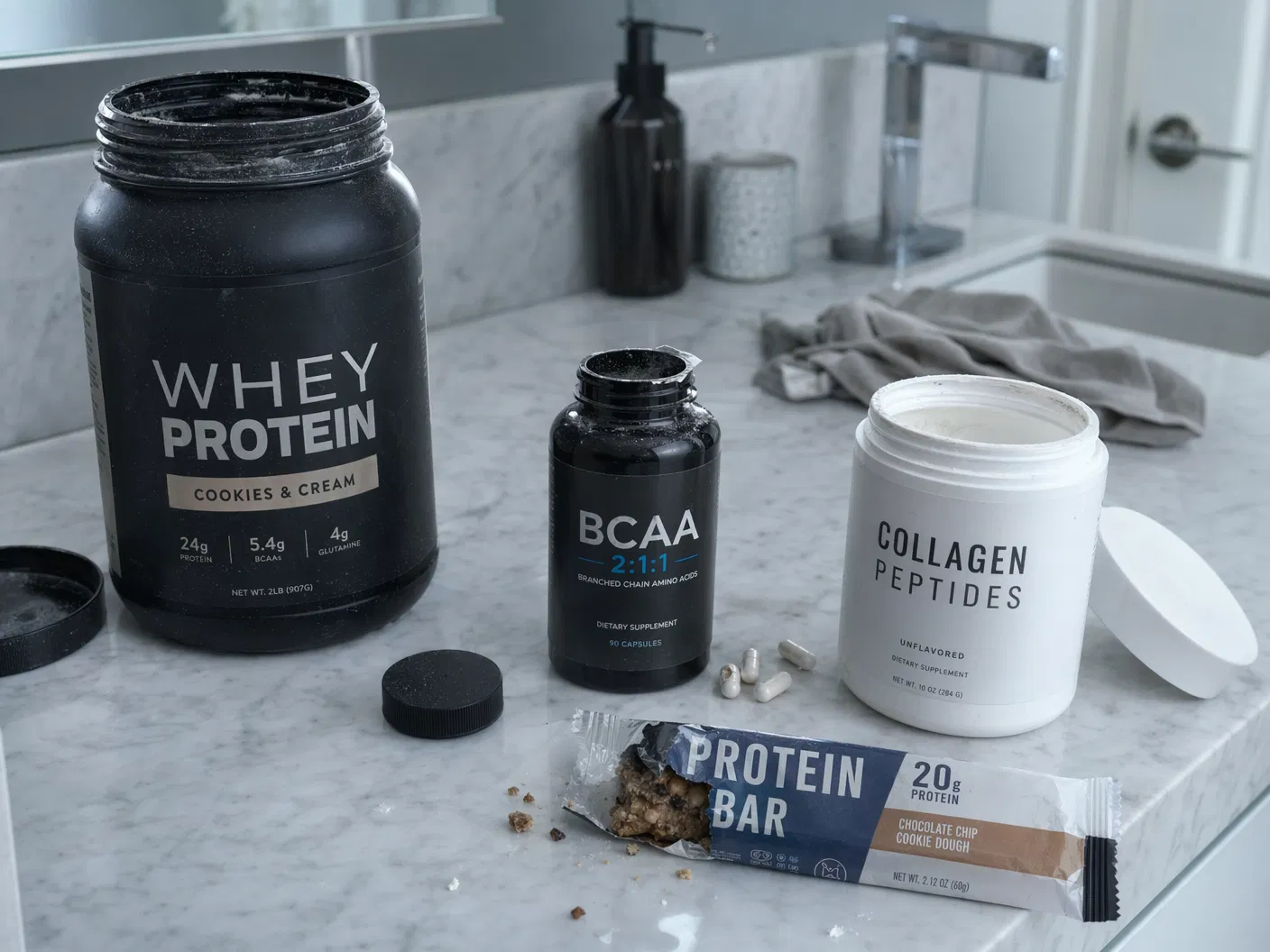
If food is off the table, shakes seem like the next logical step. So you bought them. Maybe a protein powder. Maybe BCAA capsules. Maybe collagen. Maybe all four.
They didn't work either. Here's why.
GLP-1 medications slow gastric emptying by up to 70%. That protein shake you forced down this morning isn't going to break down in the 2–4 hours it would take in a normal stomach. It's going to sit there for 4, 5, sometimes 6 hours — fermenting, making you nauseous, and by the time any amino acids actually reach your bloodstream, it's already past noon.
Every supplement company selling protein products to GLP-1 users right now knows this. They just haven't reformulated their products and they haven't put a warning on the label.
You weren't using the wrong products wrong. You were using the right products in a body that physically cannot process them the way the label assumed.
5. The Real Mechanism Is Something Called The "Starvation Signal."
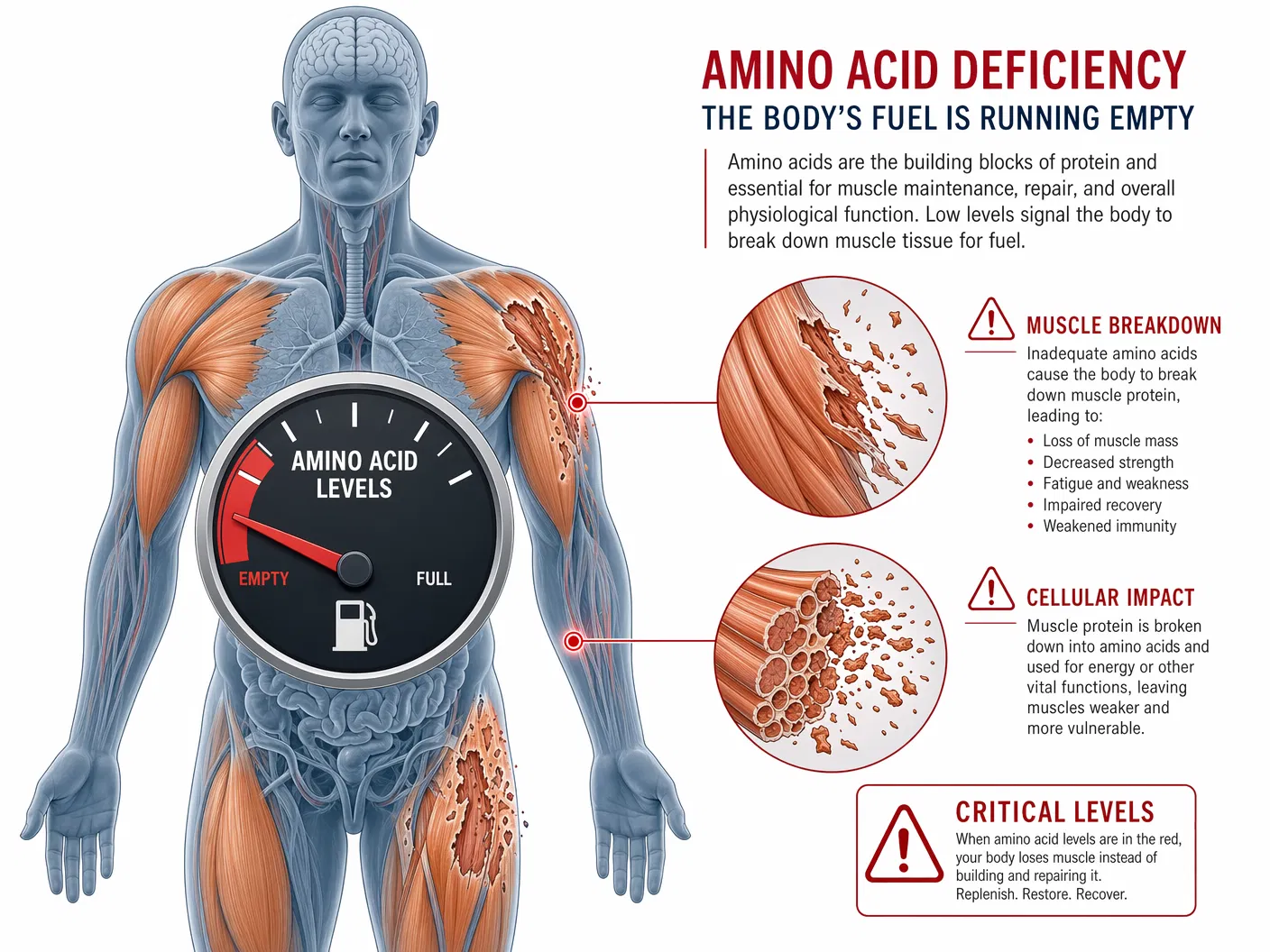
Here's what your doctor couldn't explain — because most doctors don't know it yet.
Your body measures the amino acid levels in your bloodstream constantly, like a fuel gauge. When that gauge drops below a specific survival threshold, your body triggers a biological alarm.
Researchers call it the starvation signal.
Your body can't distinguish between a prescription and a famine. All it knows is the amino acids it needs to survive are running out. And when that signal fires, your body makes a cold calculation:
This isn't a theory. NASA confirmed the mechanism decades ago in their bed rest studies — when amino acid levels dropped, lean mass was broken down first to harvest the amino acids the body couldn't get from food. The astronauts didn't lose muscle from lack of exercise. They lost it from the signal.
That signal has been firing inside you every single morning on your GLP-1. Before you've eaten. Before any protein could digest. Before you've opened your eyes.
That's why the protein couldn't save you. It was always hours too late.
60-day money-back guarantee
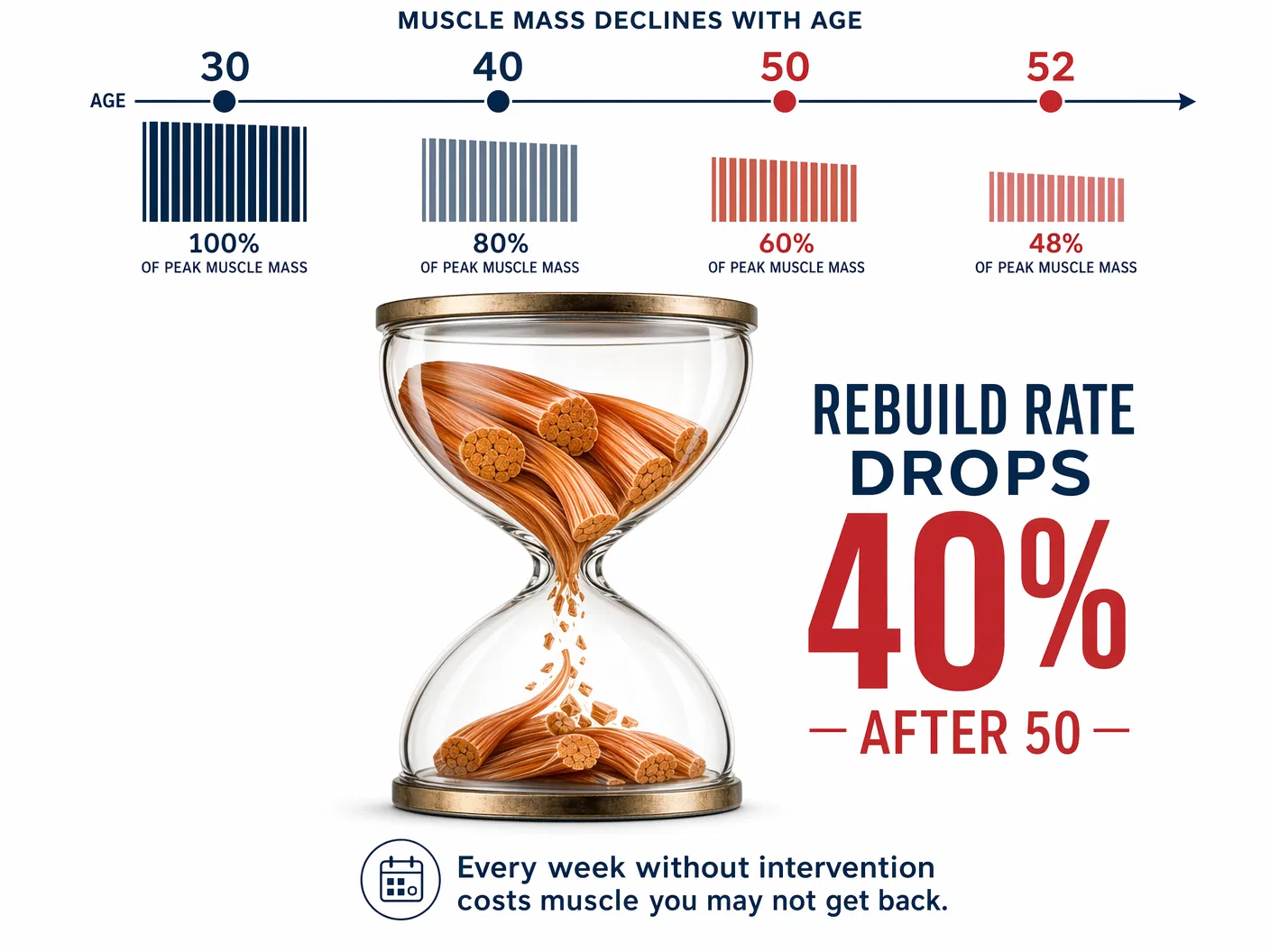
6. Every Week You Wait Costs You Muscle You May Never Get Back.
This is the part nobody wants to say out loud.
At 30, your body rebuilds muscle easily. At 52, it doesn't. Your body's ability to regenerate lean tissue drops every single year after menopause — and the muscle you're losing right now, on your current medication, at your current pace, is in a much shorter rebuild window than it would have been ten years ago.
Every pound of muscle you lose drops your resting metabolism by roughly 50 calories per day. Lose 8 pounds of muscle over six months — which the clinical data says is average — and you're now burning 400 fewer calories per day than when you started.
Which means the day you stop your GLP-1 — and almost everyone eventually does — you'll be living in a body engineered to regain every pound twice as fast as it came off.
This isn't a weight loss problem anymore. It's a weight maintenance problem you're being set up for without knowing it.
60-day money-back guarantee
7. There Is One Thing Actually Built For The GLP-1 Body.
Once you understand the starvation signal, the solution becomes obvious.
You can't eat your way out of this. Food takes hours to digest. The signal fires in minutes. You need to get amino acids into your bloodstream before the signal has a chance to fire — fast enough to keep that fuel gauge above the survival threshold.
Which means bypassing digestion entirely.
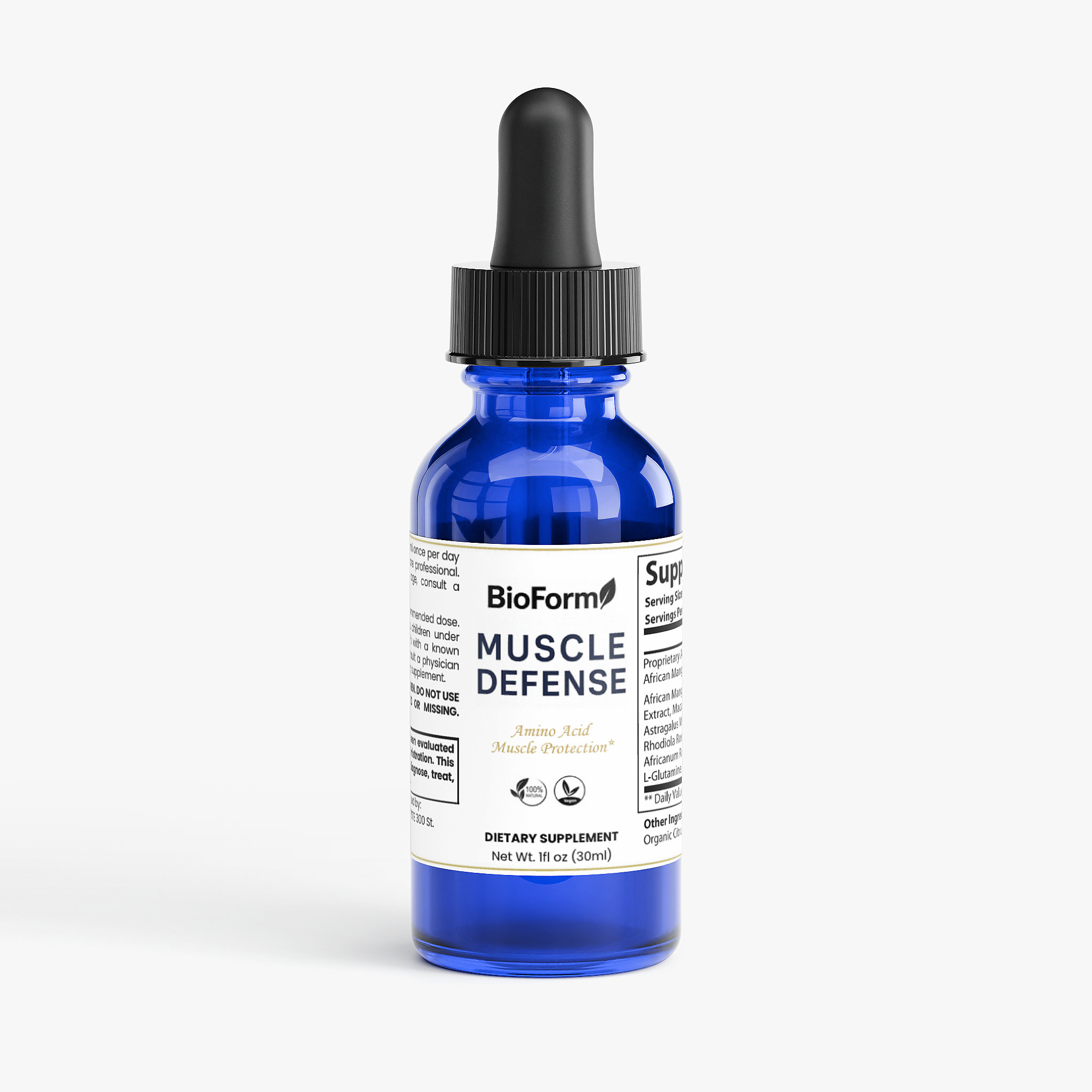
A small formulation company called BioForm Muscle Defense has engineered what's currently the only amino acid formula designed specifically for women on GLP-1 medications. It's a liquid dropper — absorbs directly under the tongue, hits the bloodstream in seconds, not the 2–4 hours it would take to digest a meal. No shake. No volume. No GI negotiation.
One dropper each morning. Eight essential amino acids. The starvation signal never fires. The muscle stays.
It's the only formula calibrated for a body that can't eat, can't digest, and can't wait.
Women using it report the same pattern — energy returns within the first week, stairs stop being a negotiation by week three, and the mirror starts showing the woman they expected to see when they started losing weight.
One of them summed it up:
"I spent five months blaming myself. Turns out it was one thing I didn't know about. I just wish I'd found it five months sooner."
60-day money-back guarantee
What To Do With This Information
If you've been on your GLP-1 for three months or more and you're losing muscle, the evidence is clear: it wasn't you. You did everything right. The system didn't.
But every day the signal keeps firing, you lose tissue that at your age is getting harder to rebuild. The window doesn't stay open forever.
BioForm Muscle Defense is currently offering new customers a 60-day risk-free trial on their starter kit — if your strength doesn't return and the muscle loss doesn't stop in two weeks, you send it back for a full refund, no questions asked.
You can see the full formula, the research behind it, and current availability on their official site below.
60-day money-back guarantee
At the time of publication, BioForm was the only liquid amino acid formula on the market specifically designed for women on Ozempic, Wegovy, Mounjaro, and Zepbound. Due to the limited batch sizes of pharmaceutical-grade amino acids, availability may be restricted.